Indice
Balcony & terrace waterproofing: a guide to lasting protection
Effective waterproofing for balconies and terraces: mastering the details
Today, for waterproof a flat roof, there are many materials to choose from.
In recent years, liquid applied membranes have proven to be a feasible, cost-effective and more environmentally friendly solution. While researching the various roof “coatings,” as these materials are commonly called, roofing applicators have realized that not all are the same.
Types, characteristics, liquid membranes, roofing
There are a few general categories of liquid roofing membranes, and each of these categories includes a wide variety of products to choose from.
The Miami-Dade County Product Approval Standard identifies a significant difference between maintenance coatings and liquid applied roofing systems; the fluid products most frequently found in both categories are elastomer-based, polyurethane, silicone, urethane , and PMMA.
Most current roof coatings offer the benefits of reflective white color, which redirects much of the UV rays and lowers the roof temperature during direct sun exposure, characteristics known as “Cool Roof.”
Also of note, it should be noted, that rehabilitating existing roofs with liquid-applied solutions avoids the important environmental aspect of having to add thousands of tons of demolished roofing materials to landfills each year.
Let’s shed light on several critical aspects to consider when choosing appropriate waterproofing solutions for flat roofs (commercial or residential).
What to do before waterproofing a roof
A good portion of flat roofs covered two or three decades ago with single-ply roofing membranes such as modified bituminous membranes that can be applied with a flame (mod bit) or with EPDM are now good candidates for salvage. Completely replacing the old roofing system with a new one is often prohibitively expensive, but in recent years liquid roofing systems have emerged on the market as trustworthy alternatives.
When deciding on the most suitable solution forwaterproofing a flat roof, the building owner or property manager should consider with equal importance not only the experience and reliability of the applicator, but also the material system chosen.
The first condition that must be met when choosing the right material is the compatibility between the existing roof surface and the liquid product intended to be used. Not paying attention to the type of material previously used to coat single-ply roofs can be a costly mistake. For example, it is a bad idea to apply urethane to a surface previously coated with acrylic elastomeric. The solvent in most urethane coating presents a high risk of re-emulsification for acrylic. Another example is a roof previously covered with silicone. This type of surface will not accept any other type of coating, as the silicone surface will hinderadhesion. Equally important before waterproofing a flat roof is proper cleaning of the substrate.
Whether it is a new roof or a pre-existing roof system, this process is very important, as the liquid products must adhere directly to the clean surface of the substrate. Debris, grease, dust, or any other material that inhibits the bond between the roof surface and the newly applied fluid material will weaken or obstruct itsadhesion. Consequently, an inadequately cleaned substrate will adversely affect the performance of the applied membrane, leading to its early failure. Pressure washing is the most common method of cleaning an existing roof for surface preparation. Most manufacturers specify their own detergent for this purpose, usually biodegradable or a widely accepted generic equivalent.
Steps to waterproof a roof
A typical application of liquid roofing membranes consists of five main steps, all of which must be treated with the utmost importance, following the product manufacturer’s instructions. These steps are: cleaning, primer application, detailing, main coating application and final inspection.
- The first step in waterproofing a roof is cleaning the substrate. All successfully applied liquid membrane systems require great adhesion. For this reason, proper cleaning is as important as the actual proper application of the liquid material. Typically, pressure washing is the most common method of cleaning the substrate surface. This process removes so-called bond inhibitors. In addition, this process will expose details that require treatment, which may not be visible at first glance.
- After cleaning,primer application to the surface is expected to improve membraneadhesion. Primers also help block the release of bituminous oils from the existing roof through the liquid membrane. Before applying most primers, applicators should ensure that the surface is dry. To reduce drying time, contractors generally use blowers or gas torches.
- The third step is detail treatment. The applicator must carefully treat all details, and only after completing this step should the application of the liquid membrane begin. Details such as interior and exterior corners, wall-floor type corners , metal flashings, pipes, vents, drains, etc. They are typically pre-treated with a reinforcedfabric reinforcement embedded in the liquid membrane and/or a sealant.
These are the most critical points in a roof that can be easily inspected, so they require special attention. Adequate curing time required by the materials used for detailing must be followed before applying the main coating.
- The next step is theapplication of the liquid membrane to the roof. There are two types of applied liquid membrane applications; some require impregnation of the reinforcement during installation and some do not. Regardless of whether reinforcement is mandatory or not, most manufacturers require that the coating application be done in two or more successive layers. The level of consumption of each coating product is indicated in the manufacturers’ technical specifications. The application method, substrate porosity, temperature, and waste are external factors that can affect the specified consumption level.
In most projects,inspection is required by the manufacturer during all stages of application. This may include primer coverage, adhesion and wind-extraction testing, visual inspection of treated details, and, in any case, inspection of the final coat of the applied coating. Adherence to material thickness during application is important. Too much liquid product applied in a single step will result in uncured material under the membrane surface; similarly, using not enough material to meet the required requirement will lead to premature failure of the membrane. Any unevenness at the edge of the reinforcement signals improper coverage of the reinforcing material in the overlap section. All such errors should be noted at the time of inspection and corrected.
Waterproofing a flat roof
The success of any flat roof waterproofing project always depends on the correct application. “Coating” a flat roof does not always mean that the roof will be waterproofed. Many coatings only serve the function of protecting the existing roof membrane from the degrading action of UV exposure, prolonging its life. For example, acrylic coatings re-emulsify in water, causing the product to completely fail in roof locations where water stagnates. Building owners and/or property managers should consider using such coatings only in cases where the roof has a good positive slope and water does not stagnate around drains. Even when choosing the liquid waterproofing membrane applied based on the situation being considered, there are many important aspects to consider for a successful waterproofing project.
- Is the substrate dry?
- Is the substrate and ambient temperature within the accepted application range?
- Is the required consumption met?
- Is the drying time of each applied layer of liquid product respected?
- How is the application properly handled with any incoming rains?
The applicator must comply with all the manufacturer’s restrictions and properly manage the application process. Strict adherence to application instructions is the surest way to waterproof a flat roof. Many manufacturers offer specialized training to applicators, product education meetings aimed at distributors, and learning sessions to designers. These activities are designed to provide valuable information about their products and inform the public about proper applicability.
How to avoid leaks in a flat roof
Regardless of the type of liquid product applied to the roof, in order to achieve a long-lasting leak-proof roof, the applicator must obtain a substrate surface free of adhesion inhibitors, treat the details thoroughly, and apply the liquid waterproofing membrane correctly. On roofs where leaks appear, they occur mostly in details that have not been properly treated; these details are ventilation pipes, drains, skylights, air handling units placed on the roof, parapet walls, and eave flashings. Details are the most sensitive points where water can infiltrate and eventually create leaks.
Often, masonry walls such as parapets or building walls that are adjacent to the roof line are not treated. Without proper coating on the parapet wall or proper repellent treatment of the masonry walls, water will be easily absorbed by it, which can lead to further water/steam transmission within the roof structure and eventually inside the building. Apart from the application process, proper maintenance during the life cycle of the roof membrane is of utmost importance. Building owners or property managers should consider employing professionals to perform periodic roof inspections and maintenance work. It is a good idea to inspect a roof at least twice a year for proper functioning of drains, removal of debris, checking the condition of the membrane, and any repairs to be made as soon as necessary. Cleaning the roof will help keep reflectance at high levels for a longer time. A “cool roof” remains efficient as long as the reflective white color is exposed to the sun and is not covered by dirt or other debris.
Characteristics of the membrane to be used for waterproofing
Most silicones on the market offer good resistance to waterlogging and are relatively easy to install. A major drawback is that silicone coatings cannot be coated with other liquid products, and coating with the same silicone generally requires an inconvenient process, which comes at a high price for both material and labor. Limitations imposed by weather conditions are another important issue that property managers and building owners should consider. Applicators are often limited by these restrictions, especially during spring and fall.
How much does it cost to waterproof a flat roof
The cost of waterproofing a flat roof depends on the choice of liquid membrane applied. When estimating the cost of waterproofing a roof, the building owner or property manager must equally consider the material cost and the labor cost, both of which depend on the choice of material to be used. The type of coating and by implication the amount of material to be used based on the specified consumption (whether or not primer and reinforcing fabric are required), the cost of accessories and/or additional detailing material ultimately determines the final material cost. Most elastomeric and silicone coatings vary and generally start from €9 for a low quality membrane to over €16 for a high quality membrane for the material cost per square meter alone. The labor cost is determined by the amount of time it takes the applicator to complete the waterproofing process. Cleaning, substrate preparation, and application of the liquid membrane should all be arranged with enough time for the process to be properly completed in order to have an accurate labor cost.
What to consider
Sometimes, property managers and owners do not dwell enough in evaluating the reliability, functionality, and importance of the correct choice of waterproofing solution for their roofs. It is very important to emphasize the costs associated with maintenance and repairs during the life of the roof membrane, as well as the costs of re-coating at the end of the warranty cycle. These costs usually skyrocket for materials with low application costs; generally, for inferior waterproofing solutions the price is initially low and then grows exponentially over time. On the other hand, a well-chosen, high-quality waterproofing solution carries a higher price at the time of application, keeping maintenance costs low and fewer repairs will be needed over time. In addition, an effective liquid membrane waterproofing system will allow for a very cost-effective coating process when the warranty expires.
ONE
Why ONE might be the best solution Winkler ONE is a high-performance flat roof waterproofing solution that encompasses all the positive features of a liquid system applied to the roof. [youtube https://www.youtube.com/watch?v=qNiyi6SDC6Q]
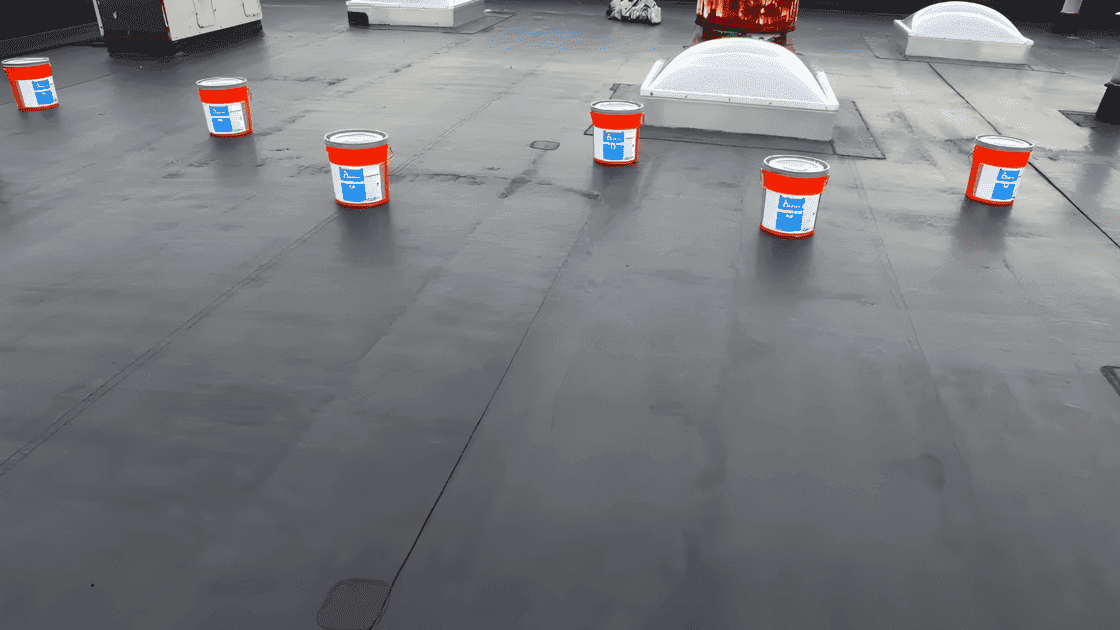
The material cost of Winkler ONE may be higher than that of other liquid membranes, however, the labor cost for application is reduced due to the shorter duration of application steps and the effectiveness of detailing. A roof covered with Winkler ONE will have minimal maintenance and repair costs and will allow for a simple subsequent coating process. Winkler ONE is a primer-free hybrid material composed of 100 percent active ingredient with zero VOC, which is extremely easy to apply to a wide variety of substrates such as concrete, roof panels, modified bituminous slated or smooth membranes, slabs, EPDM, etc. It cures to form a monolithic waterproofing membrane resistant tostanding water, which can be re-coated at any later time without special treatment. None of the drawbacks of acrylic or silicone type coatings are present in Winkler ONE. In addition, application is possible at extreme temperatures (between 0 °C and 45 °C). Winkler ONE can be applied to wet surfaces, either for emergency repairs or immediately after the substrate cleaning process. This helps save time compared to other liquid applied membranes that need the surface to dry. The application of Winkler ONE can be handled perfectly even in approaching adverse weather conditions, as the product becomes rain-resistant in as little as 2 hours. The application time spent on the roof when applying Winkler ONE is drastically decreased, thus minimizing the labor cost. For detailing pretreatment, Winkler offers a big advantage through the use of accessories such as BC Seal Band (self-adhesive butyl band); BC Seal Pad (self-adhesive butyl mastic square); and Winjoint Band (butyl band cover). By replacing the use of a liquid product with a reinforced mat embedded in these areas with self-adhesive butyl bands and elements, Winkler eliminates curing time, thereby reducing the life of the project. Winkler uses high-quality water repellent SKERMO 2 to waterproof masonry walls, concrete parapets or other vertical walls adjacent to the roof. This treatment does not interfere with the original “breathability” characteristics of the wall and does not affect its final color. Overall, on a market that offers many liquid waterproofing systems, Winkler ONE is a complete solution forwaterproofing flat roofs. A knowledgeable owner or property manager will choose Winkler ONE because of the comprehensiveness of its features that aim to minimize the risk of further repairs, keep maintenance costs at the lowest level, and yet benefit from a roof that embodies the latest and most effective environmentally friendly technology.
DISCOVER WINKLER ONE the world’s first and only liquid roof coating that can be applied to wet surfaces and extreme temperatures (0 °C and 45 °C).


FAQ
What are the first signs to check for to identify water ingress on a balcony?
The first thing to assess is the condition of the visible flooring. Carefully check the grout lines between the tiles: if they are empty, cracked, or inconsistent, it is very likely that water is already getting through. Likewise, check for broken or cracked tiles, as these also provide a direct path for water to damage the underlying layers.
Is it always necessary to remove the entire flooring to fix a leak on a balcony or terrace?
Not always, as it depends on the severity of the damage. If the water ingress is superficial and limited to the grout lines, a non-invasive procedure is possible: cleaning, re-sealing the grout with a waterproof filler, and applying a transparent protective treatment. However, if water has already damaged the underlying layers, a full refurbishment is necessary, involving the removal of tiles to waterproof the screed beneath.
Apart from the tiles, what are the most critical points on a balcony where leaks typically originate?
The most critical points, where the majority of leaks start, are the ‘details’. These include the grout lines, thresholds at doorways, floor-to-wall junctions, expansion joints, and drains. These areas require particular attention and the use of specialist components like sealing tapes to ensure a watertight seal.