
Index
Easy to Renovate, Hard to Waterproof
In modern construction, most projects involve the renovation of existing buildings, characterised by highly heterogeneous materials and construction techniques. While renovation is often straightforward, achieving correct waterproofing remains one of the most complex challenges on site.
Thresholds, corners, upstands, and delicate materials make traditional systems difficult to apply. Yet water protection remains essential to guarantee durability, safety, and the long-term value of the structure.
This is where hybrid waterproofing systems come in — combining prefabricated bituminous membranes with liquid membranes, delivering both speed of installation and maximum adaptability to complex details.
What Are Hybrid Waterproofing Systems
A hybrid system integrates two complementary technologies:
- Prefabricated bituminous membrane → fast and effective on large surfaces
- Liquid membrane → ideal for complex details, thresholds, corners, and junctions
The goal is to leverage the strengths of both: productivity on large areas and precision on critical construction details.
In practice, during many renovations windows and doors are replaced while thresholds and substrates remain in place. In these areas, hot-applied bitumen is not applicable, making elastic and continuous liquid solutions essential.
Key Advantages of Hybrid Systems
- Fast execution on large surfaces
- Application flexibility on critical details
- Continuous waterproofing without interruptions
- High durability and resistance to weathering
- Compliance with technical standards and best practice
“Integrating different technologies means selecting each product based on the specific detail to be solved, rather than forcing a single solution onto every situation”, notes Leonardo Castelvecchio, Winkler technical sales consultant and chairman of the PML group technical committee.
Practical Case Study: Restoration of a Weather-Exposed Terrace
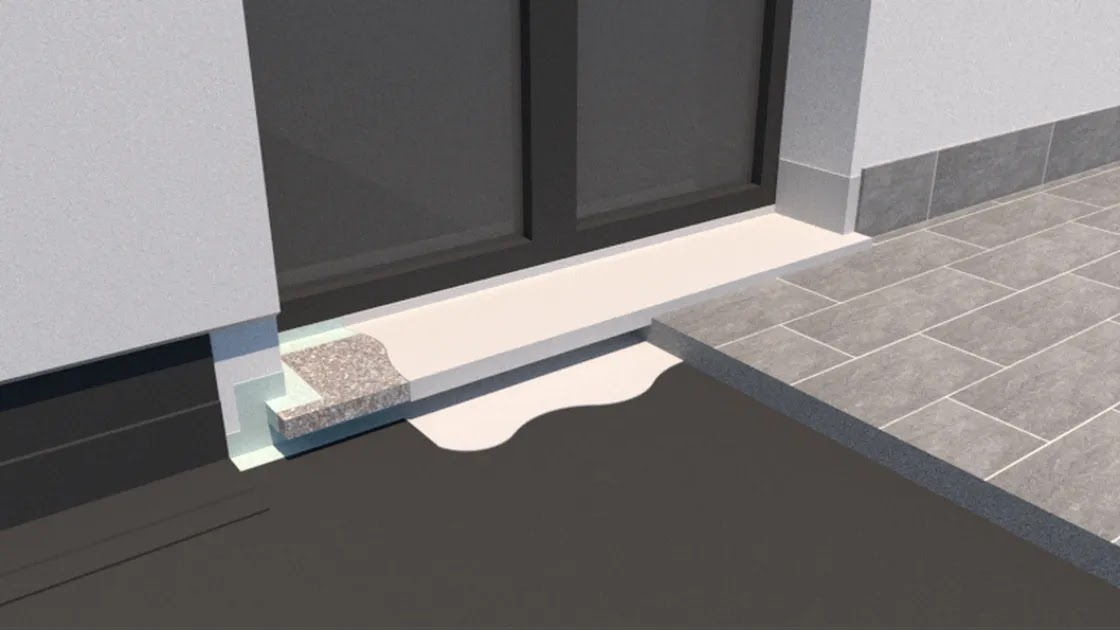
In the refurbishment of terraces and accessible roofs, thresholds are often the weakest point in the system.
Historically in Italy, polymer-modified bituminous membranes applied by torch have been the standard — a highly reliable solution on large surfaces, but difficult to apply on delicate elements or areas subject to wear. This can result in unprotected zones or incorrect installation.
The solution is a hybrid system that allows each individual detail to be addressed with a product specifically designed for that application:
- EXPERTA 400 bituminous membrane for the main surface
- ONE® liquid membrane for thresholds and critical details
- BC SEAL BAND accessories for corners and junctions
Result: complete waterproofing without compromising aesthetics or functionality.
“When it comes to large roof surfaces, bituminous membranes are still the safest choice”, explains Riccardo Villani, Winkler consultant and national reference in the waterproofing sector. “The difference lies in the details — that’s where you need materials capable of adapting to the geometry of the substrate. This is why hybrid systems are today the most advanced solution available.”
How to Choose the Right Bituminous Membrane
The choice depends on the intended use of the roof and the expected mechanical stresses.
For a walkable terrace, the system must be resistant to:
- Screed loads
- Foot traffic
- Puncture
- Thermal shock
The optimal solution involves a double layer of EXPERTA 400 at 4 mm, compliant with EN 13707 for applications under heavy protection, featuring:
- Polyolefin-modified bitumen (flexibility down to −20°C, heat resistance up to 140°C)
- High-weight polyester reinforcement
- High stability and long-term durability
How to Choose the Right Liquid System
For thresholds and details, the following factors must be assessed:
- Nature of the substrate
- Presence of residual moisture
- UV exposure
- Need for a visible, walkable finish
An elastic, breathable product applicable even on damp substrates is therefore required.
Solutions such as ONE® provide:
- Adhesion on heterogeneous materials
- Continuous waterproofing
- Resistance to weathering
- Safe, walkable surface
Step-by-Step Application
Bituminous Membrane
Surface Preparation
- Thorough cleaning: removal of loose parts and existing waterproofing residues
- Slope verification: if insufficient, build up with WINPLAN PRO premixed screed to a minimum 1.5% fall
- Application of ECOPRIMER bituminous primer to ensure optimal adhesion
Installation
- Double layer of EXPERTA 400 applied by torch
- Rolls laid perpendicular to the slope to prevent ponding
- Second layer offset by half a roll width
- Minimum vertical upstands of 15 cm above the finished floor level
Advantages: Continuous waterproofing, reduced critical points, and fast installation on large surfaces.
Liquid Membrane
Surface Preparation
- Check cohesion and clean the surface: remove dust, loose materials, and any detaching parts
- On friable substrates, apply a consolidating primer such as WINFIX CONCRETE
Accessory Application
- Apply BC SEAL BAND self-adhesive butyl tape to treat concave angles between wall and floor and around the threshold perimeter
Liquid Membrane Application
- Apply ONE® — a ready-to-use, single-component product — following the consumption rates indicated in the technical data sheet
- Apply evenly until the critical area is fully covered
Anti-Slip Finish
- Once ONE® has dried, apply ONE® FLOORING as a thin-coat finish
- The quartz aggregate incorporated in the product creates the correct surface texture, ensuring mechanical grip and user safety
System Advantages
- Effective closure of the detail, fully integrated with the bituminous system
- Applicable even on damp or irregular substrates
- Anti-slip safety and long-term durability
Conclusions
Effective waterproofing does not depend on a single product, but on the correct combination of materials.
Even apparently simple projects — such as a terrace renovation — can present complex challenges that require specific technical solutions. Integrating bituminous membranes and liquid systems delivers continuity, safety, and durability without compromise.
The hybrid approach adopted by Winkler represents one of the most advanced solutions available today for waterproofing renovation projects.
FAQ – Frequently Asked Questions
1. What are hybrid waterproofing systems?
Hybrid systems combine two complementary technologies: prefabricated bituminous membranes for large surfaces and liquid membranes for complex details such as thresholds, corners, and junctions. The goal is to combine installation speed with adaptability to critical construction details.
2. Why use a hybrid system instead of a single membrane?
In renovation projects, certain areas do not allow torch-applied bitumen, while others require fast coverage of large surfaces. The hybrid system makes the most of both solutions, ensuring continuous, long-lasting waterproofing without compromising aesthetics or functionality.
3. What are the main advantages of hybrid systems?
- Fast execution on large surfaces
- Flexibility on critical details
- Continuous waterproofing without interruptions
- High durability and resistance to weathering
- Compliance with technical standards and best practice
4. How do I choose the right bituminous membrane?
It depends on the intended use and the expected mechanical stresses. For walkable terraces, a double layer of EXPERTA 400 at 4 mm is recommended, with polyolefin-modified bitumen and high-weight polyester reinforcement, compliant with EN 13707.
5. How do I choose the right liquid membrane?
Consider: nature of the substrate, presence of residual moisture, UV exposure, and the need for a visible, walkable finish. Products such as ONE® offer adhesion on heterogeneous materials, continuous waterproofing, and a safe, walkable surface.
6. Are hybrid systems suitable for difficult thresholds and corners?
Yes. The liquid membrane, combined with accessories such as BC SEAL BAND, allows concave angles, thresholds, and junctions to be treated effectively, sealing all critical details and preventing water ingress.
7. Can liquid membranes be applied on damp substrates?
Yes. Products such as ONE® are elastic, breathable, and applicable even on damp or irregular substrates, without compromising adhesion or durability.
8. What is the ultimate goal of a hybrid system?
To guarantee continuous, reliable waterproofing by combining speed, adaptability, and durability. Even complex projects — such as terraces with delicate thresholds — can be fully protected without aesthetic or functional compromise.